


Neighborhoods and communities exist in a safe environment typically made for families, children, and pedestrians to walk around with minimal worries to vehicles that are driving too fast. One of the tools to help slow down cars and make roads safer is a speed bump. Read more about speed bump on this link.
Speed bumps may sometimes be a nuisance to drivers when they encounter them, however they play a huge part in creating safer roadways. As they become a sign of responsible community planning and care, you may find it helpful to understand the role speeds bumps play within the community.
The Purpose of Speed Bumps
Speed bumps serve one purpose in life, to slow down cars. Unlike stop signs and traffic lights, speed bumps will physically inhibit how fast a car can travel, thus allowing for a reliable tool to manage traffic. Furthermore, you have likely noticed that although drivers may slow down when they see a speed bump, however in the immediate distance following this bump, they are traveling cautiously.
This makes speed bumps especially useful in areas where children regularly play and in areas of high pedestrian traffic. Speed bumps alter the speed at which vehicles can naturally travel, and are a reminder that speed limits should be obeyed-obviously in the absence of law enforcement. Communities that have implemented speed bumps have directly seen improvement in their safety records.
• Speed bumps are meant for changing driver speed quickly.
• Speed bumps help stop speeders in places where speed allowances are often ignored.
• Speed bumps help accomplish the peace of mind for residents want safer roads in their communities.
Traffic Calming Benefits
Traffic Calming is defined as strategies that can be used to help reduce speeds and create safer roadways for everyone. Speed bumps are one of the most basic and low-cost types of traffic calming measures. By forcing vehicles to slow down, speed bumps reduce the frequency and severity of accidents.
Visit https://www.sciencedirect.com/topics/engineering/traffic-calming for more details.
In addition, speed bumps increase driver awareness; when a vehicle is traveling at 20 miles-per-hour as opposed to 40 miles-per-hour, the driver has much longer to stop in an emergency situation than at double the speed—a huge improvement on pedestrian safety! Communities that adopt effective traffic calming measures claim they feel more walkable, family friendly and can foster a greater sense of communal trust when neighbors know their neighbors are relying on a measure of safety being installed.
• Accidents in residential neighborhoods decrease.
• Noise decreases, who does not love a quieter neighborhood as slower moving vehicles are less engaging.
• Parents greater comfort in allowing their children to see or bike next to near-car improvements.
Common Locations for Speed Bumps
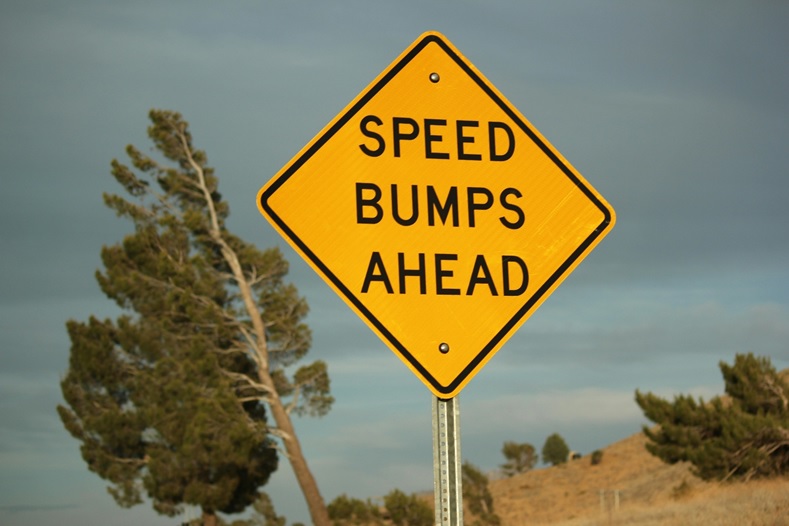 Speed bumps are not installed arbitrarily. They are typically installed specifically after studies show there is an out-of-the-norm in speeding problem in a defined area. You will often see speed bumps in situations where there is safety (the protection of people) is greater than traffic flow (the movement of vehicles).
Some of the common locations include:
• School areas where children cross and are dropped off,
• Residential neighborhoods where heavy pedestrian traffic exists
• Parking lots, where heavily mixed traffic amongst vehicles and foot traffic.
• Private roads, or roads managed by Hoa’s, where residents get to vote for greater control over local traffic.
In reality, many homeowners’ associations will request speed bump installation Vacaville and other areas to help keep their communities safer. Road construction service contractors that are familiar with the craft of construction provide professional speed bump installation that will last a long time, as bumps are constructed with proper spacing and height. The partnership between residents and professionals is the basis to build safer neighborhoods together.
Materials Used in Installation
Speed bumps can be constructed with a few materials, and each has its positives. Asphalt is the most popular, specifically for permanent installations. It fits well on existing pavement while still being able to be resurfaced and repaired. Concrete bumps will last a long time but are expensive, and difficult to remove once installed.
In temporary or commercial applications, a pre-fabricated, pre-formed rubber speed bump may be used. These bumps can be bolted in place for use, and taken away when they are no longer needed, making them flexible at best, but not as durable as asphalt.
Professional paving contractors will take precise measurements to ensure that the bumps that are being constructed are sufficiently elevated for effectiveness without damaging vehicles. This is where skilled paving contractors that understand asphalt paving services will make a considerable difference. Proper slope, height, and alignment makes an immeasurable impact on the speed bump overall performance. Furthermore, a speed bump that is maintained will continuously provide the safety benefits discussed above for communities.
• Asphalt: economical, durable & blends well with any road.
• Concrete: durable but more expensive.
• Rubber: flexible & temporary use.
Are Speed Bumps Always Effective?
Speed bumps are a solid tool for creating safety, but not perfect. Some drivers may still get to fast between speed bumps. Speed bumps can be designed poorly, resulting in either frustration for residents who should be slowing down in the first place, or be attributed to damaging vehicles. Additionally, in some areas, speed bumps may not be the appropriate tool to address the issue, speed humps, raised crosswalks or reducing widths are tools that may be effective.
This is why communities should always consult with a qualified road construction service to evaluate conditions before making decisions. Proper placement, planning & construction helps ensure speed bumps meet the community goal, without creating extra problems.
Speed bumps remain one of the most valuable methods of slowing vehicles and creating safer streets. They also give the residents confidence that they live in a community where safety is prioritized, especially for children and pedestrians.
Final Thoughts
Speed bumps may not be the sexiest thing about your community, but they are an essential piece of community safety and reducing accidents. Knowing the reasons behind why they are installed, where they are typically installed, and how they are installed, will create a further appreciation of their role in keeping your streets safe.
