

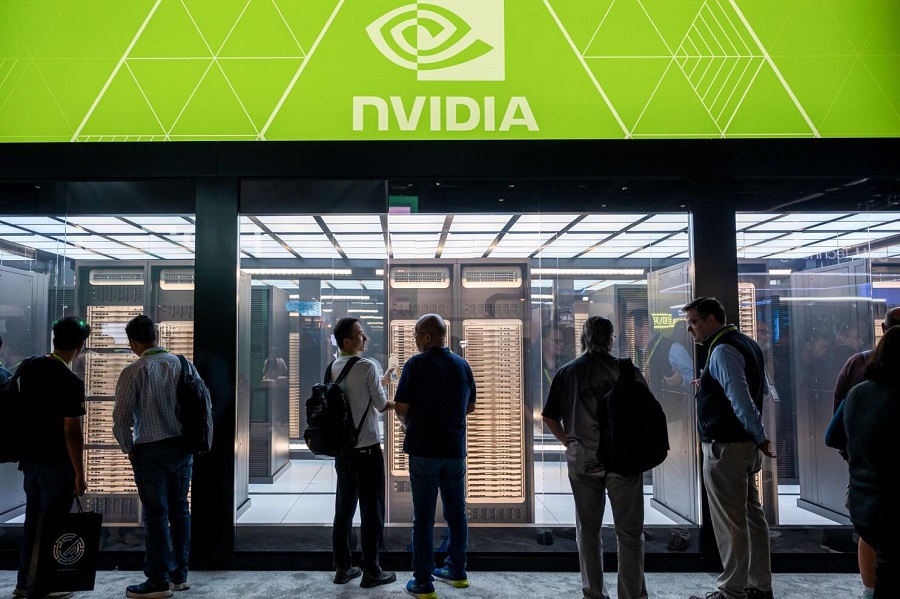
NVIDIA Corporation stands as a primary architect of the modern digital age. Founded in 1993, the company has transitioned from a niche hardware manufacturer for video game enthusiasts into a global powerhouse driving the artificial intelligence revolution. To understand NVIDIA is to understand the shift from general-purpose computing to accelerated computing, a transition that has redefined industries ranging from healthcare to autonomous transportation.
The Genesis of Accelerated Computing
The story of NVIDIA began in a Denny’s restaurant in San Jose, California, where Jensen Huang, Chris Malachowsky, and Curtis Priem envisioned a future where specialized hardware could solve problems that traditional Central Processing Units (CPUs) could not. At the time, the primary challenge was graphics. The standard CPU was designed for sequential processing, meaning it handled one task at a time very quickly. However, rendering complex 3D images required thousands of simultaneous calculations.
NVIDIA’s solution was the Graphics Processing Unit (GPU). By utilizing a parallel processing architecture, the GPU could manage thousands of threads at once. This breakthrough did more than just improve the frame rates of video games; it laid the foundation for a new computational paradigm. The release of the GeForce 256 in 1999, marketed as the world’s first GPU, marked a definitive shift in the industry, establishing NVIDIA as a leader in high-performance silicon.
CUDA and the Pivot to General Purpose GPUs
Perhaps the most significant strategic move in NVIDIA’s history was the 2006 introduction of CUDA (Compute Unified Device Architecture). Before CUDA, GPUs were strictly for graphics. Developers had to “trick” the hardware into performing scientific calculations by disguising them as pixels. CUDA provided a programming model and software platform that allowed developers to use C, C++, and Fortran to program the GPU directly for general-purpose mathematical tasks.
This move was initially met with skepticism by Wall Street, as it required massive research and development spending without immediate financial returns. However, it proved to be a masterstroke. By the time the academic community discovered that GPUs were exceptionally efficient at training neural networks, NVIDIA already had a decade-long head start in software infrastructure. This created a “moat” that competitors still struggle to cross today.
Dominance in the Data Center
While NVIDIA remains a household name in gaming, its primary engine of growth has shifted to the data center. Modern AI models, such as Large Language Models (LLMs), require astronomical amounts of compute power. NVIDIA’s H100 and subsequent Blackwell architectures are not merely chips; they are complex systems designed to handle the massive datasets required for generative AI.
The company’s dominance in this sector is driven by several factors:
-
Performance Scalability: NVIDIA chips are designed to work in clusters, allowing thousands of GPUs to function as a single massive supercomputer.
-
The Software Ecosystem: Beyond CUDA, NVIDIA offers libraries like cuDNN for deep learning and TensorRT for high-performance inference, making it the default choice for AI researchers.
-
Networking Integration: With the acquisition of Mellanox in 2020, NVIDIA gained control over high-speed networking technology (InfiniBand), ensuring that data moves between chips as fast as the chips can process it.
Diversification into Automotive and Omniverse
NVIDIA is not content with being a component supplier; the company seeks to be a full-stack computing platform. One of its most ambitious ventures is the NVIDIA DRIVE platform. This provides an end-to-end solution for autonomous vehicles, combining hardware (the Orin and Thor chips) with software stacks for perception, mapping, and planning. By positioning itself as the “brain” of the self-driving car, NVIDIA is tapping into a market that spans from personal transit to commercial logistics.
Furthermore, the NVIDIA Omniverse represents the company’s foray into the “Industrial Metaverse.” Omniverse is a platform for 3D design collaboration and digital twin simulation. Large-scale manufacturers use it to build exact digital replicas of their factories. By simulating a factory’s operations in a virtual environment before a single brick is laid, companies can optimize workflows and reduce waste. This convergence of AI, graphics, and simulation highlights NVIDIA’s ability to find synergies across different technological domains.
Financial Performance and Market Position
The financial trajectory of NVIDIA over the last decade is unprecedented in the semiconductor industry. Its market capitalization has soared, at times making it one of the most valuable companies in the world. This growth is fueled by high margins and a near-monopoly on high-end AI training hardware.
However, such a dominant position invites scrutiny and competition. Tech giants like Google, Amazon, and Microsoft have begun designing their own custom AI chips (TPUs and ASICs) to reduce their reliance on NVIDIA. Simultaneously, traditional rivals like AMD and Intel are investing heavily in their own accelerated computing lineups. Despite this, NVIDIA’s pace of innovation remains its greatest defense. The company has moved from a multi-year product cycle to an annual release cadence for its top-tier AI chips, forcing competitors to chase a moving target.
Challenges and Ethical Considerations
Growth at this scale is not without its hurdles. NVIDIA faces significant geopolitical challenges, particularly regarding export controls on high-end silicon to certain international markets. Because NVIDIA’s chips are considered dual-use technology (useful for both civilian AI and military applications), they are often at the center of trade negotiations and national security policies.
Supply chain management is another critical area. NVIDIA is a fabless semiconductor company, meaning it designs the chips but relies on foundries like TSMC (Taiwan Semiconductor Manufacturing Company) for fabrication. Any disruption in the global semiconductor supply chain, whether due to natural disasters or political instability, poses a direct risk to NVIDIA’s ability to meet the insatiable demand for its hardware.
The Future of NVIDIA
Looking forward, NVIDIA is positioning itself at the center of the “Sovereign AI” movement. This is the idea that nations should own and operate their own AI infrastructure to protect their data and culture. By partnering with governments to build national AI supercomputers, NVIDIA is expanding its footprint beyond the traditional cloud service providers.
The company is also leaning heavily into “Edge AI.” While the last decade was about training models in massive data centers, the next decade will be about running those models on local devices—robots, medical imaging tools, and smart appliances. NVIDIA’s Jetson platform is designed specifically for this purpose, bringing high-performance AI to the physical world.
Frequently Asked Questions
What is the difference between an NVIDIA GPU and a standard computer processor?
A standard processor (CPU) is designed for versatile, sequential tasks and is optimized for low latency. In contrast, an NVIDIA GPU is built for high-throughput parallel processing. While a CPU might have a few dozen cores, a high-end NVIDIA GPU has thousands of smaller cores, allowing it to perform many mathematical operations simultaneously, which is essential for rendering graphics and training artificial intelligence models.
Why is the CUDA platform considered a competitive advantage?
CUDA is a software layer that allows developers to use the GPU for general-purpose computing. Because it has been in development for nearly two decades, it has a massive library of pre-written code, tools, and a large community of trained developers. For a competitor to displace NVIDIA, they would not only need to build a better chip but also recreate the entire software ecosystem that developers have relied on for years.
Does NVIDIA manufacture its own semiconductor chips?
No, NVIDIA follows a fabless business model. The company handles the research, design, and software development in-house but outsources the actual physical manufacturing of the silicon wafers to specialized foundries. Its most significant manufacturing partner is TSMC, though it has also utilized Samsung’s foundries for certain product lines.
How does NVIDIA contribute to the field of healthcare?
NVIDIA provides specialized platforms like NVIDIA Clara, which uses AI to accelerate medical imaging, genomics, and drug discovery. By using GPUs to process complex biological data, researchers can identify potential drug candidates in months rather than years. Additionally, their technology powers real-time AI in surgical robots and diagnostic equipment.
What is the significance of the Mellanox acquisition?
The acquisition of Mellanox was a turning point because it allowed NVIDIA to move beyond just making chips to providing the entire data center fabric. Mellanox specializes in high-speed interconnects. In AI workloads, the bottleneck is often not how fast a chip can think, but how fast data can travel between chips. Controlling the networking technology ensures that NVIDIA’s hardware operates at maximum efficiency.
What is a Digital Twin and how does NVIDIA support it?
A Digital Twin is a virtual representation of a physical object or system, such as a car engine or an entire warehouse. NVIDIA’s Omniverse platform allows companies to create these twins with high physical accuracy. This enables businesses to test “what-if” scenarios, such as changing a production line layout, in a risk-free virtual environment before implementing changes in the real world.
How is NVIDIA addressing the high energy consumption of AI?
NVIDIA focuses on “performance per watt” as a primary metric. While AI training requires significant power, accelerated computing is often more energy-efficient than traditional CPU-based computing for the same tasks. By completing complex calculations faster and using more efficient architectures like Blackwell, NVIDIA aims to reduce the total carbon footprint required to run global AI workloads.
