

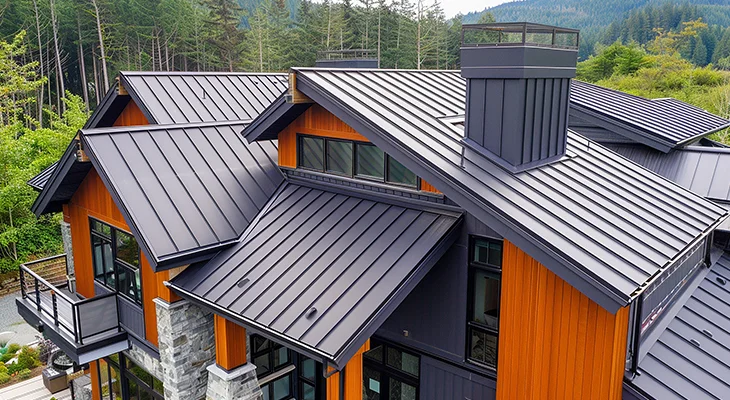
Selecting the right roofing material for a modern home involves balancing aesthetic clean lines with long-term structural performance. Modern architecture often emphasizes minimalism, sustainability, and industrial-inspired textures. Because the roof accounts for a significant portion of a home’s exterior surface area, the choice of material directly impacts curb appeal, energy expenditure, and the total cost of ownership.
The following guide provides a deep dive into the primary roofing materials used in contemporary construction, comparing their lifespans, cost profiles, and environmental footprints.
Metal Roofing: The Modern Standard
Metal roofing has become synonymous with modern home design. Its ability to provide sharp, defined edges and a seamless transition between the roof and walls makes it a favorite for architects. While once reserved for commercial buildings, residential metal roofing has seen a surge in popularity due to its extreme longevity and recycled content.
Standing Seam Metal
Standing seam systems are characterized by vertical ribs that conceal the fasteners. This design is not just for looks; by hiding the screws beneath the metal panels, the system eliminates thousands of potential leak points.
-
Longevity: 40 to 70 years.
-
Aesthetics: Ideal for “Modern Farmhouse” or “Industrial Contemporary” styles.
-
Energy Efficiency: Highly reflective, often reducing cooling costs by 25%.
Metal Shingles and Tiles
For homeowners who want the durability of metal but prefer a more traditional texture, metal shingles can be manufactured to mimic slate, wood shakes, or even clay tiles. These provide the same Class A fire rating as standing seam but offer a different architectural rhythm.
Synthetic and Composite Roofing
As natural materials like slate and cedar become more expensive and harder to source, synthetic alternatives have filled the gap. These materials are engineered from a mix of recycled rubber, plastic, and specialized resins.
Advantages of Synthetics
Synthetic roofing is designed to be lightweight. A major hurdle with natural slate or clay is the requirement for reinforced roof framing. Synthetics bypass this need while maintaining a high-end look.
-
Impact Resistance: Many composite shingles carry a Class 4 impact rating, making them nearly impervious to hail damage that would shatter natural slate.
-
Sustainability: Most synthetic options utilize post-consumer waste, such as recycled tires and plastics, keeping these materials out of landfills.
-
Color Consistency: Unlike natural stone, which can vary wildly in hue, synthetic tiles offer a controlled color palette that is essential for monochromatic modern designs.
Natural Slate: The Century-Long Investment
Slate is often referred to as the “forever roof.” If the goal of a modern home is to create a legacy structure that requires minimal intervention over the next century, natural slate is the premier choice.
Performance and Weight
Natural slate is literally stone, making it completely fireproof and resistant to rot or insect infestation. However, it is also the heaviest material on the market. A typical slate roof can weigh between 800 and 1,500 pounds per square (a 100-square-foot area).
-
Cost: High initial investment, often triple the cost of high-end asphalt.
-
Durability: It is not uncommon for slate roofs to last 100 to 150 years.
-
Maintenance: While the stone itself is durable, the copper or stainless steel fasteners used to hold it in place must be of equal quality to ensure the roof doesn’t “shed” tiles over time.
Architectural Asphalt Shingles
Asphalt remains the most common roofing material in the United States, but modern homeowners typically opt for architectural (or dimensional) shingles over the older 3-tab variety.
Modern Dimensional Design
Architectural shingles are composed of multiple layers of glass fiber mat coated with asphalt. This layering creates a shadow line that provides depth and texture.
-
Affordability: This is the most budget-friendly way to achieve a clean, professional look.
-
Installation: Because asphalt is a standard material, labor costs are lower, and the pool of qualified contractors is much larger.
-
Advanced Features: Modern asphalt shingles can now be treated with “cool roof” granules that reflect infrared radiation, helping a traditionally dark roof stay significantly cooler in the summer.
Clay and Concrete Tiles
Often associated with Mediterranean or Southwestern modernism, tile roofs offer high thermal mass, which is excellent for temperature regulation.
Concrete vs. Clay
-
Clay Tiles: These are baked in a kiln and are exceptionally colorfast. They do not fade under intense UV exposure, making them ideal for high-sun environments like Arizona or Florida.
-
Concrete Tiles: A more affordable alternative to clay, concrete tiles can be molded into flat, interlocking shapes that fit perfectly with a minimalist, geometric modern home. While they are slightly more porous than clay, they offer similar fire and wind resistance.
Flat Roof Membranes: TPO and EPDM
Many modern homes feature flat or low-slope roofs to accommodate rooftop terraces or to maintain a low-profile silhouette. Standard shingles cannot be used on these surfaces because they rely on gravity to shed water.
TPO (Thermoplastic Polyolefin)
TPO is a single-ply white membrane that is heat-welded at the seams. Its bright white color is its greatest asset in modern design, as it reflects the sun and prevents the “heat island” effect. It is a clean, industrial-looking solution that is highly effective at waterproofing.
EPDM (Ethylene Propylene Diene Terpolymer)
Often called “rubber roofing,” EPDM is typically black. It is extremely durable and handles thermal expansion and contraction better than almost any other material. For modern homes in colder climates, the black surface can help absorb heat during the winter, though it is less efficient in the summer compared to TPO.
Comparison Table of Modern Roofing Materials
| Material | Expected Lifespan | Weight | Cost Profile | Best Modern Style |
| Standing Seam Metal | 50+ Years | Lightweight | Moderate to High | Industrial, Farmhouse |
| Natural Slate | 100+ Years | Very Heavy | Very High | Luxury Minimalist |
| Architectural Asphalt | 25-30 Years | Moderate | Low | Transitional Modern |
| Synthetic Composite | 40-50 Years | Lightweight | Moderate | Contemporary Slate-look |
| Concrete Tile | 50+ Years | Heavy | Moderate to High | Desert Modern |
| TPO Membrane | 20-25 Years | Lightweight | Moderate | Flat-roof Geometric |
FAQ
What is the best roofing material for a home with a very low pitch?
For roofs with a pitch lower than 2:12, traditional shingles and tiles are not recommended because water can back up under the material. Membrane systems like TPO, PVC, or EPDM are the standard for low-slope modern architecture. These systems are chemically or heat-welded to create a continuous, watertight seal across the entire surface.
Can a modern home support the weight of a slate or tile roof?
Most standard residential framing is designed for asphalt shingles. If you wish to install natural slate or clay tile, an engineer must usually inspect the trusses and load-bearing walls. In many cases, additional structural reinforcement is required to handle the thousands of extra pounds of dead weight.
Is metal roofing noisier than other materials during rainstorms?
This is a common misconception. When installed over a solid roof deck with modern underlayment and attic insulation, a metal roof is no louder than an asphalt roof. The wood decking and insulation act as a sound barrier, dampening the “pinging” sound associated with metal.
How does roofing choice affect solar panel installation?
Metal roofing, specifically standing seam, is the best material for solar integration. Specialized clamps can attach the solar racking directly to the metal ribs without penetrating the roof surface. Asphalt and tile require penetrations and flashing, which can increase the risk of leaks over time.
Are “cool roofs” only available in white?
While white is the most reflective, modern technology allows for “cool” versions of dark colors. Specialized pigments can reflect the non-visible spectrum of sunlight (infrared) while still appearing dark gray, black, or bronze to the human eye. This allows for modern aesthetics without the heat gain.
What is the primary cause of roof failure in modern composite materials?
In most cases, the material itself does not fail; the installation or the “flashing” does. Flashing refers to the metal pieces installed around chimneys, vents, and valleys. Even the most expensive slate roof will leak if the flashing is done poorly or if low-quality sealants are used during the installation process.
Is it possible to install a new roof over an existing one to save money?
While some building codes allow for a “re-roof” (adding a second layer of asphalt shingles), it is generally discouraged for modern homes. Adding a second layer traps heat, shortens the lifespan of the new shingles, and prevents the contractor from inspecting the roof deck for rot or structural damage.
