

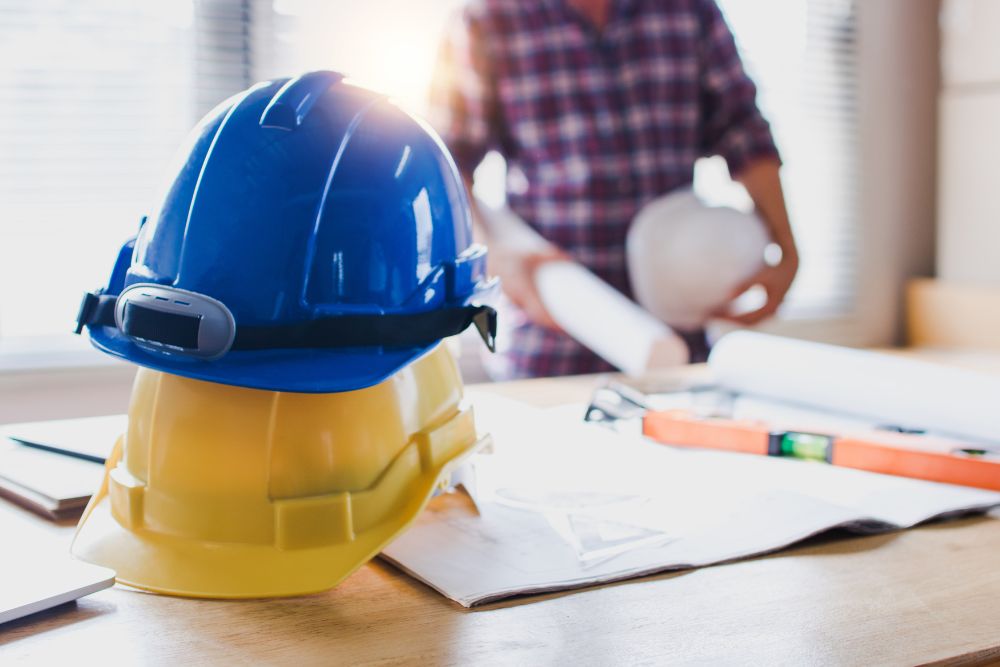
If you’ve ever worked around construction sites or industrial environments, you know that hard hats are required. But what you might not know is why certain helmets cost double of others if they’re basically the same appearance-wise. They’re graded for their impact resistance, and for where that impact may come from.
Safety helmets are classified by type based on which direction they’re intended to protect against. Type 1 withstands impact on the top of the head. Type 2 does that too, but it’s also tested for side and rear impacts. This hardly seems like a difference, but it represents an entirely different engineering approach and a completely different workplace hazards.
How Top Impact Protection Works
The basic design of the hard hat came from one legitimate concern: something above your head is going to fall onto your head. Construction sites, warehouses, and manufacturing facilities share the concern of dropped tools, falling debris, and overhead materials in many aspects of their day-to-day operations.
Thus, for example, a Type 1 uses a suspended liner that is inside the hard hat shell. If something falls and strikes the top of the helmet, the exterior shell diverts and distributes the force impact while the suspension liner absorbs energy and keeps the hard hat shell away from the skull. This type of design has sufficed for decades as previous workplace injury data suggested that most head injuries were from falling objects directly above head.
The material of the shell is crucial here; modern helmets are made from high-density polyethylene or ABS plastic which is made to crack or deform with extreme force. This may seem like a detriment, but it’s meant to occur – the hard hat is sacrificed so it can absorb energy that would otherwise be transferred to the head. After a significant impact event, even if the hard hat looks fine on the outside but crumbled on the inside, it must be replaced.
The Issue with Side Impact
However, not all impact comes from above. Workers often bump their heads on equipment, get hit by swinging loads, or injure themselves during a fall. Lateral impact creates a different directional transfer of force that a suspension system is not designed for.
Furthermore, a Type 1 helmet offers little protection against side strikes; while the suspension system doesn’t reach around the side and back enough to accommodate the impact, neither does the exterior shell offer enough cushion underneath to divert against a strong lateral blow. Although it’s better than nothing, serious injury can occur. This lack of protection has become clear through years of workplace safety data.
Industrial spaces with mobile equipment and tight workspaces, or those that employ extensive elevated work, pose an increased risk for lateral impact. For example, oil and gas operations, mining sites, and utility work frequently involve those who can get struck from any angle. Therefore, when businesses assess these types of job site conditions, options like a safety helmet with extended impact protection makes sense in spaces where side strikes can happen.
What Makes Type 2 Different
When it comes to lateral impact protection, Type 2 helmets have better padding and suspended liners that grasp around the head more effectively. This means there’s more foam or cushioning that pads along the sides and back instead of just on top. Some designs have impact-absorbing foam that adheres to a shell’s interior while others add more complicated suspension systems with additional cradle points.
This is evident when testing. ANSI Z89.1, which governs safety helmet requirements in the United States and Canada, requires a Type 2 to withstand front, back and side impact forces, not just crown. Furthermore, it must limit force transmitted to the head to 1,000 lbs or less, and there should be no contact from striker to headform in a test position.
This added protection makes it a little bit heavier, as in a few ounces, and more expensive as Type 2s might run a few dollars more than Type 1s (although this is important for someone wearing it for an eight- or ten-hour shift). But it’s not unreasonable when factoring in increased materials and more complicated constructions. For certain work environments, this cost increase makes sense.
Where Application Differences Exist
The ultimate decision about helmet type should come from an honest hazard assessment, what are the risks present on your job site? If someone is working under active construction with tools above them and plenty of clearance in other areas, Type 1 protection is likely enough.
But what about those working near energized equipment who climb utility poles? Pipeline workers may work in confined trenches; manufacturing spaces have tight quarters around machinery. There exists elevated risk in those scenarios where someone could strike their head on a fixed object or be hit by moving equipment from various angles.
Type 2 helmets make sense for jobs involving climbing or elevated work where falls can lead to something striking their head on structures during descent; this enhanced side or rear protection provides additional comfort that top-only protection does not cover.
Regulatory Compliance Requirements – Who Needs What?
According to OSHA regulations for safety helmets, employers must assess workplace hazards relative to PPE needs. For head protection this means having an awareness of what impacts may occur.
For some industries, Type 2 helmets have become commonplace; assessments of risk are clear enough to indicate this direction for employers wanting to ensure maximized protection for their workers.
However, employers are not required by regulation to implement Type 2 for every situation; they must assess conditions on a case-by-case basis. Document hazard assessments; consider what incidents have occurred or almost occurred before doing so. Evaluate work settings and processes honestly instead of assuming what’s cheapest or what was always used in the past.
One thing that surprises many people is that Type 2 helmets do not automatically cost significantly more than Type 1s; over the years, the price difference has leveled off as these have become standard designs more often than not. When factoring in potential costs for a serious head injury – medical fees, lost workdays, litigation costs, human costs – the difference in hard hat price paled in comparison.
Replacement Considerations
Regardless of helmet type safety helmets do not last forever; based on sun exposure, extreme temperatures and general wear/tear, over time they’re not effective materials anymore. For most manufacturers five years is recommended even without obvious damage so replacement is suggested. After any significant impact incident it’s suggested replacement happens immediately.
Type 2s require no more inspection standards than any other head safety gear; look for cracks and splits or indentation with damage. Note if the suspension system has broken components or stretching, if anything is out of place, time for a new one.
It’s also important to make sure it still fits properly; if padding has shown wear with compression or deterioration then a new one is warranted.
The Bottom Line
Part of why these helmets are classified is because different jobs pose different hazards, and therefore a Type 1 works perfectly well in many settings while Type 2 performs well for specific risks that justify additional protection in response.
Neither option is better across-the-board, they’re better for specific threat profiles. Determining what’s best should not come from simply taking whatever hard hat is on hand; safety equipment is most effective when it aligns with actual hazards workers are facing daily without guesswork.
For environments where lateral impacts are possible realities, and they often are, the additional protection found through Type 2 design is worthwhile. For other settings where overhead hazards are prevalent without proximity restrictions associated with lateral impacts, providing only Type 1 protection sufficiently addresses major concerns without excess frills.
Ultimately, it’s about doing due diligence to match equipment to an environment based on a real hazard assessment rather than habitual choice or assumption. That’s why there are classifications, to give employers and safety managers information necessary to make educated and safe decisions related to their unique situations.
